

Where industry meets the energy transition.
Nista is an editorial publication on industrial energy management, decarbonization, and the European energy transition — written for the operators, engineers, and managers who run it on the factory floor.

FIG. A — Industrial site at dusk. Photo: editorial.
Topic
Industrial energy & decarbonization
Geography
European Union & UK
Audience
Operators, engineers, managers
Cadence
Weekly · long-form
From the desk · Linz, Austria
European industry uses roughly a quarter of the continent’s energy. Most coverage of how it does so is unreadable.
Industrial energy is the part of the European decarbonization story that gets the least attention and matters the most. Steel, cement, chemicals, food processing, paper, glass — the operations that produce the physical economy — consume roughly 25 percent of all energy used in the European Union. The choices made inside those facilities over the next decade will determine whether the EU’s 2030 and 2050 climate targets are met, missed by a margin, or missed by a chasm.
And yet the coverage of how industrial operators actually navigate this transition is split between three modes that all fail in different ways. Vendor blogs read like extended sales pitches. The financial press writes about decarbonization at the level of national policy and corporate ESG reporting, rarely landing inside the operations where the work actually happens. The engineering journals are excellent and almost entirely inaccessible to anyone without an institutional subscription.
Nista is an attempt to write about industrial energy from inside the operations — with the precision of an engineer, the skepticism of someone who has been pitched too many energy management software demos, and the assumption that readers can handle a kilowatt-hour figure without it being glossed in a metaphor.
By the numbers
25%
Share of total EU energy consumption attributable to industrial use, 2024.
Source · Eurostat
€460bn
Annual European industrial energy spend across the manufacturing sector.
Source · IEA estimates
−55%
EU mandated emissions reduction target for 2030, against 1990 baseline.
Source · Fit for 55 package
14 yrs
Editor’s time spent inside Austrian industrial energy operations.
Source · this masthead
The coverage
Three editorial tracks. One subject.
[ 01 · 02 · 03 ]
Track 01
Energy Operations
Reviews and analysis of the software and platforms used inside industrial energy management: monitoring systems, building automation, IoT energy meters, EMS platforms, carbon accounting tools. We test what the vendors don’t put in the demo.
[ Software · Hardware · Vendor reviews ]
Track 02
The Decarbonization Economy
Long-form analysis of the regulatory landscape that shapes industrial energy decisions: CSRD, CBAM, the EU ETS, carbon pricing, ESG reporting requirements, subsidy programs. Written for operators who need to translate policy into operational decisions.
[ EU policy · Carbon markets · Compliance ]
Track 03
The Operator’s Desk
Practical workflow content for the people running industrial energy programs day to day: ISO 50001 implementation, efficiency audits, retrofit economics, capex planning, vendor selection, EU funding applications. The unsexy operational layer.
[ ISO 50001 · Audits · Capex planning ]
“
Decarbonization will not happen because Brussels mandates it. It will happen because the engineer running the boiler at 3 a.m. has reasonable software, accessible data, and the budget authority to act on what the data shows.
Editorial position · Nista
FIGURE 1 · Reference data
The EU industrial energy mix, 2024.
Where the energy that runs European factories actually comes from. The composition is roughly 38 % natural gas, 32 % electricity, 13 % oil products, with the balance from biomass, coal, and renewables consumed on site.
| Sector | Typical intensity | Reduction potential, 2030 |
|---|---|---|
| Iron & steel | 20 GJ / t crude steel | 25–35% — hydrogen-DRI, scrap-EAF transition |
| Cement | 3.5 GJ / t cement | 15–22% — alternative fuels, clinker substitution |
| Chemicals (basic) | 18 GJ / t product | 20–30% — electrification, process heat integration |
| Paper & pulp | 11 GJ / t paper | 15–25% — CHP optimisation, heat recovery |
| Food & beverage | 2.5 GJ / t product | 25–40% — heat pumps, refrigeration upgrades |
| Glass | 7 GJ / t glass | 18–28% — electric melting, oxy-fuel furnaces |
| Mechanism | Who it applies to | What it does |
|---|---|---|
| EU ETS | ~10,000 industrial installations | Cap-and-trade on CO₂. Free allowances declining toward zero by 2034. |
| CBAM | Importers of steel, cement, aluminium, fertilisers, hydrogen, electricity | Carbon border tax. Full financial enforcement from 2026. |
| CSRD | Listed firms; large unlisted from 2026; SMEs from 2027 | Mandatory sustainability reporting under ESRS standards. |
| Energy Efficiency Directive (EED) | Member states & large enterprises | Mandatory energy audits every four years for non-SMEs. |
| Renewable Energy Directive (RED III) | Industrial energy users | Indicative target of 1.6% annual renewable energy increase in industry. |
| Industrial Emissions Directive (IED 2.0) | ~52,000 industrial installations | Best Available Techniques (BAT) reference documents; permit conditions. |
Current focus
Latest from the desk.
[ Updated weekly ]
- “The AI Bill Is the Part Nobody Quotes You Upfront” — A Conversation
 Interview · Track 01 · Energy Operations “The AI bill is the part nobody quotes you upfront.” A conversation with Markus Holzinger on what AI automation actually costs… Read more: “The AI Bill Is the Part Nobody Quotes You Upfront” — A Conversation
 - What CSRD Actually Requires from Industrial SMEs in 2026
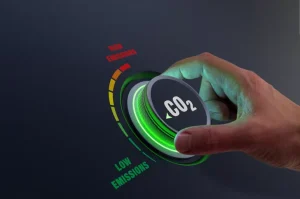 Regulatory explainer · Track 02 · The Decarbonization Economy What CSRD actually requires from industrial SMEs in 2026. The Omnibus I package narrowed CSRD’s scope dramatically in late… Read more: What CSRD Actually Requires from Industrial SMEs in 2026
 - Energy Management Software in 2026: A Vendor-Agnostic Comparison
 Comparison · Track 01 · Energy Operations Energy management software in 2026: an honest, vendor-agnostic comparison. The market has roughly 80 platforms with overlapping functionality, six distinct vendor… Read more: Energy Management Software in 2026: A Vendor-Agnostic Comparison
Reader questions
Frequently asked questions.
Q.01
Who is Nista written for?
Energy managers, plant engineers, sustainability officers, operations directors, and the consultants who support them. Anyone responsible for the actual day-to-day operation of industrial energy systems in Europe, plus the policy and finance professionals who need to understand what those operators are dealing with.
Q.02
What does Nista cover that vendor blogs don’t?
Vendor blogs cover one product line, written by marketing teams, with the goal of leading the reader toward purchase. We cover the operational reality across multiple vendors and platforms, with no commercial relationship to any specific tool, and the goal of giving readers an honest picture of trade-offs.
Q.03
Why focus on European industry specifically?
Because European industrial decarbonization is uniquely complex — multiple overlapping regulatory regimes (EU ETS, CBAM, CSRD, EED, RED), genuinely binding emissions targets, mature reporting infrastructure, and operators who have to act now rather than in some future planning horizon. The problems are sharper here than in most other geographies.
Q.04
Do you accept sponsored content?
No sponsored content disguised as editorial. We may include affiliate links to vendors we genuinely recommend, disclosed within the relevant article. Vendor relationships do not determine editorial direction, and reviews can be unfavourable.
Q.05
How technical is the writing?
We assume readers can handle kilowatt-hours, gigajoules, and an emissions factor without explanation. Specialised industry terminology is used directly where it’s the precise word, with a brief gloss the first time it appears. We do not pretend industrial energy is simpler than it is.
Q.06
Is Nista based in Vienna?
No. Nista is edited from Linz, in upper Austria — the heart of the Austrian industrial belt. The choice is deliberate: most coverage of industrial energy is written from policy capitals (Brussels, Vienna, Berlin), and we wanted distance from that orbit. Linz is where actual industrial operations live.
Q.07
What languages do you publish in?
Primarily English, as the lingua franca of European industrial energy management. Selected articles are also published in German for the Austrian and German operator audience. We do not currently translate into other European languages.
Q.08
How often does Nista publish?
A long-form piece roughly weekly, plus shorter analysis notes when the regulatory environment shifts (which it does often). Quality over volume — three thorough pieces in a month is more useful to readers than ten shallow ones.
Q.09
Can I submit a tool or service for review?
Yes. Energy software vendors, consultancies, and equipment manufacturers can write to the editor with details. We do not guarantee coverage and do not accept payment for reviews. Editorial verdicts are independent of submission.
Q.10
Is Nista affiliated with any vendor, association, or political body?
No. Nista is an independent editorial project. We have no commercial relationships with any energy software vendor, equipment manufacturer, consultancy, trade association, or political body. No grants, no sponsorships, no advisory board positions.

EDITOR · LINZ
From the masthead
Markus Holzinger
Markus spent fourteen years as an energy manager at mid-sized Austrian manufacturers, working through the iron-and-steel and food-processing sides of upper Austria’s industrial economy. Mechanical engineering at TU Graz; energy systems specialisation later. Lives in Linz with his family.
He started Nista to write about industrial energy the way it actually exists inside operations — with the precision of an engineer, the patience of someone who has implemented an ISO 50001 program from scratch, and a particular impatience with vendor marketing that promises savings the underlying physics doesn’t allow.
Editorial desk
Linz, Austria
48.3069° N
14.2858° E
Industrial · Upper Austria